
Space Sustainability: From a Black Hole to Mainstream
[Published on March 18, 2026]
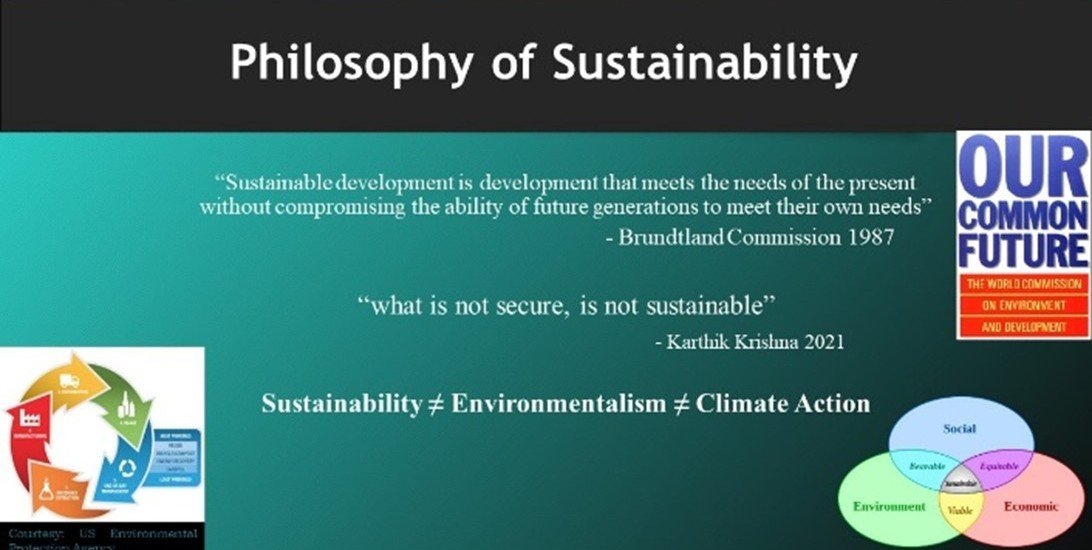
Finding common ground for sustainable development on our beautiful planet has been elusive due to various factors. Sociology and the overlap between economic security and national security are far bigger factors than technical barriers that humanity needs to overcome to make progress on a sustainable trajectory. Whether you choose materials footprint or questionable carbon dioxide (CO2) footprint as a “green metric”, the richest and most powerful nation - United States - is widely considered the worst offender and for very good reasons. The intention behind this article is to put the spotlight on authentic foundations (or lack there-off) for global space sustainability discourse and leadership. It is also a call for collaborative efforts to bring the topic out of defense and aerospace technical “blackholes” and raise the awareness among more mainstream global audiences.
For decades, the "Big Sky" theory—the idea that space is so vast we could never possibly fill it with junk—governed our orbital behavior. But in 2026, as we cross the threshold of over 11,000 active satellites and an estimated 1.2 million fragments of debris larger than 1cm, that theory aged poorly. Because no single entity "owns" Low Earth Orbit (LEO), there is a powerful first-mover incentive to launch massive constellations as quickly and cheaply as possible to secure market share or strategic dominance. However, while the benefits of these launches are private and immediate, the costs—particularly space orbital congestion and debris—are socialized across all of humanity.
There needs to be better mass education and awareness of how close we are to rendering the orbital commons unusable for future generations. In the age of global hyperconnectivity thanks to “borderless” social media and ubiquitous AI, modern-day narrative warfare vectors and their influences must be better understood and addressed in order to create authentic and impactful leadership forums. This is where conscious DOVE Leadership paradigm needs to take center stage and more on that program from Om Voyages in separate communication releases.
American space enthusiasts may find it hard to accept but a for-profit U.S. entity – starlink – is the single biggest source of space junk today along with Russian Government controlled Roscosmos. That’s based on sheer volume of starlink satellites launched and the debris of Soviet-era satellite breakups.
Like how government mandated electric vehicles mass deployment has little to do with real environmental protection, SpaceX owned starlink satellites have little to do with over-hyped mars settlements and more to do with disrupting and conquering internet service provider markets on planet Earth. While I am not asking (or expecting) you to agree fully with my own views, I do wish to gather support to create forums that bring together diverse authentic viewpoints in a healthy fashion.
One of the key issues with sustainability, whether on earth or in space, is the lack of universally accepted metrics. That said, significant progress has been made to move past the "why" of space sustainability and into the "how." Most noteworthy are European efforts split between a voluntary, reputation-based rating system (SSR) and a more aggressive, regulatory-driven push (Zero Debris).
The Space Sustainability Rating (SSR)
Born out of the World Economic Forum the SSR is designed to be the "LEED Certification" of orbit. It’s a voluntary system that uses a tiered scoring system (Bronze, Silver, Gold, Platinum) to incentivize better behavior from Space actors.
The Main Alternative: ESA’s "Zero Debris" Charter
While the SSR is an incentive system, the European Space Agency’s Zero Debris Charter (updated in early 2026) is a requirement framework. It represents a paradigm shift from "mitigation" (making less junk) to "zero growth."
Another issue that has been mostly neglected is how it threatens astronomy. While light pollution negatively impacts both amateur and professional astronomers, observatories face data loss and significant barriers to space discovery.
I do wish the best to well-intentioned global initiatives that take humanity forward towards sustainability; both in space and on earth. However, in the spirit of being authentic, I’d also like to express my skepticism of global society banking on the same (failed) paradigm of European-led initiatives in the 21st century. That paradigm has proven to be incapable of addressing market and security dimensions in a world where Asian technical and economic prowess play a dominant instead of a submissive role. On the other hand, the unbridled financial greed and utter lack of accountability from capitalistic American society have been an unrivalled source of blockades rather than solutions for sustainable development. Do we need aliens to step-in and save us, or can humanity find RESSURECTION?