
The Murugan Moment for global Hindus
**The following is a scripture of my own. Relevant authentic insights and critiques are welcome**
______________
Growing up in Hyderabad India, I was familiar with the Mata, Pita, Guru, Daivam order. Mother first. Then father. Then teacher. Then God.
My tantric global voyages since becoming a naturalized citizen of United States that included revisits to sacred South Indian temple towns and villages, has changed my perspective on that order. I believe it is not a prioritization order that’s set in stone but something that is alive and flips as you progress in life.
In the beginning, you only know the arms that hold you and nourish you. So Mata is Daivam, the highest form of the Divine in your life. That is complete for that stage. Then you need Pita to show you the world beyond those arms. You need Guru to show you how to think beyond your family name. Each time, what was once Daivam becomes the floor you stand on to reach the next level.
If and when you make significant progress toward self-realization, your inner alignment shifts. You no longer see the world through your parents' eyes. Ideally, you begin to see through the eyes of the Atma (consciousness) itself - that which transcends time and space, and from which even Mata and Pita were born.
From that place, you may see something that was invisible before: that Mata and Pita are also children. That they too were trying to understand Daivam. That they can love you deeply and still make a mistake in how they offer spiritual guidance.
This is life’s Murugan Moment in my book.
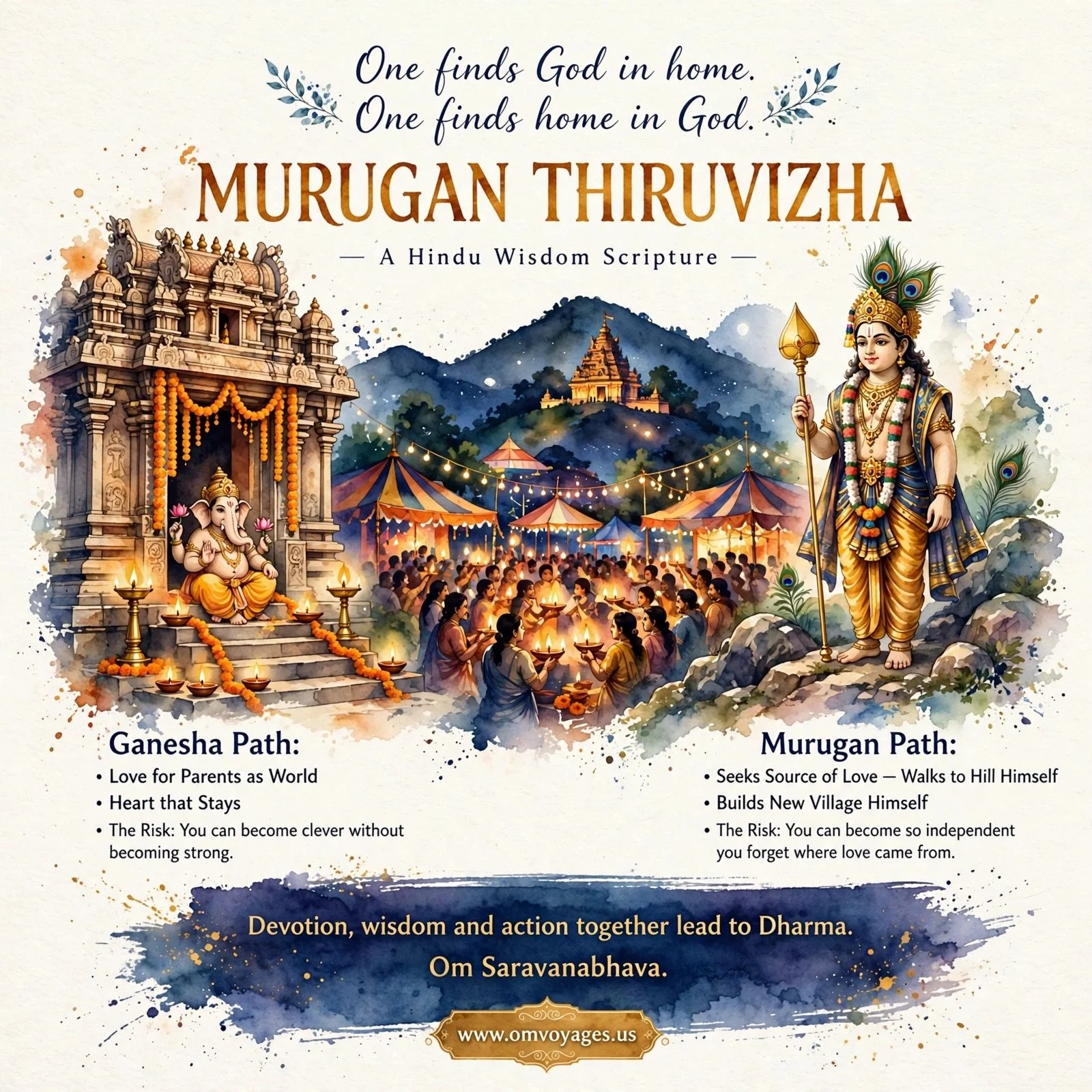
Murugan is also known through other names like Skanda and devotees in the “Shiva-Shakti universe” are quite familiar of His brother Ganesha - the elephant God.
Per most popular narratives, Ganesha’s approach is to look at Mata-Pita and say, "You are my world, you are enough for me." While many invoke him as the remover of obstacles, I’d characterize him as the clever emotional one. The India I grew up in, can be emotional to a suffocating level!
Murugan's wisdom has evolved further. He looks at the same Mata Pita and says: "I see you. I honor you. But I cannot pretend you are the whole world, because I have now seen what you yourselves came from.”
Upon declared a loser of the contest between brothers that his parents created, Murugan leaves the abode of Shiva-Shakti called Kailash and goes south to find his own hill. While the search for a new hill may seem like an exile, it is not a betrayal of his parents.
Away from Kailash but never forgetting his roots, Murugan securely built his independent Dharmic kingdom (the hill) that still shines wisdom and bliss across many regions. He carries the vel that his mother gave him and still answers when his father calls him Jnana Pandita and asks him for his insights. Leaving did not break the family thread. It made the entire thread far richer in terms of spiritual wealth.
On the hill, the ladder flips. Mata Pita Guru Daivam becomes Daivam meeting itself in Mata, Pita, Guru. The son becomes Guru to his own father, not to humiliate him, but to return the gift.
There can be different paths for moksha (freedom) and bhoga (fulfillment) but I urge you to actively seek and understand the blindspots and risks in whatever path you choose for yourself. Remember that you can become clever without becoming strong first. Conversely, if you choose to fire up your “inner Murugan”, remember that independence often comes at a painful cost.
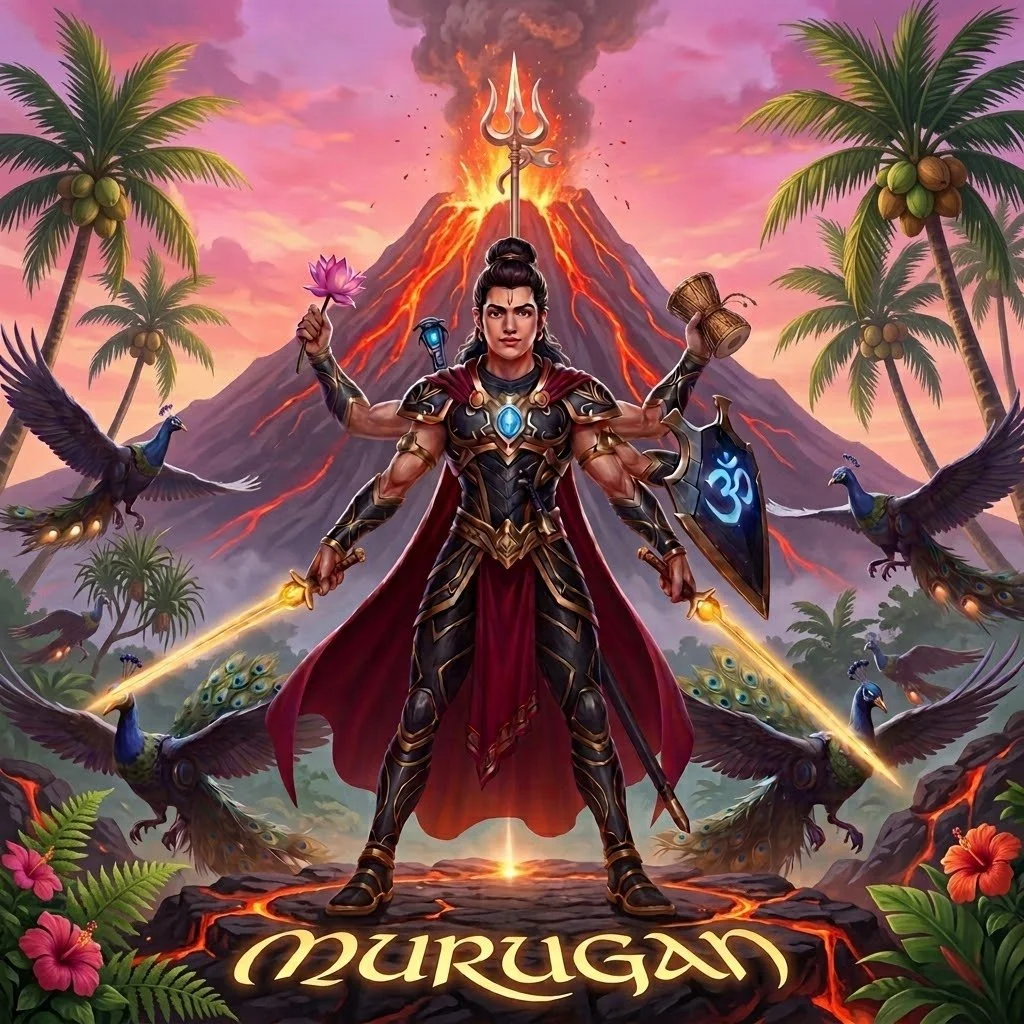
Namo Karthikeya